An engine rebuild is more than replacing a handful of worn parts and putting the engine back together. Once the engine is apart, measurements and damage determine which parts are reusable, which need machining, and which need replacement. Two engines with similar mileage often need very different rebuild work. Understanding the process helps owners evaluate a rebuild estimate and see why careful measuring matters as much as the new components installed.
A Rebuild Starts With Inspection and Measurements
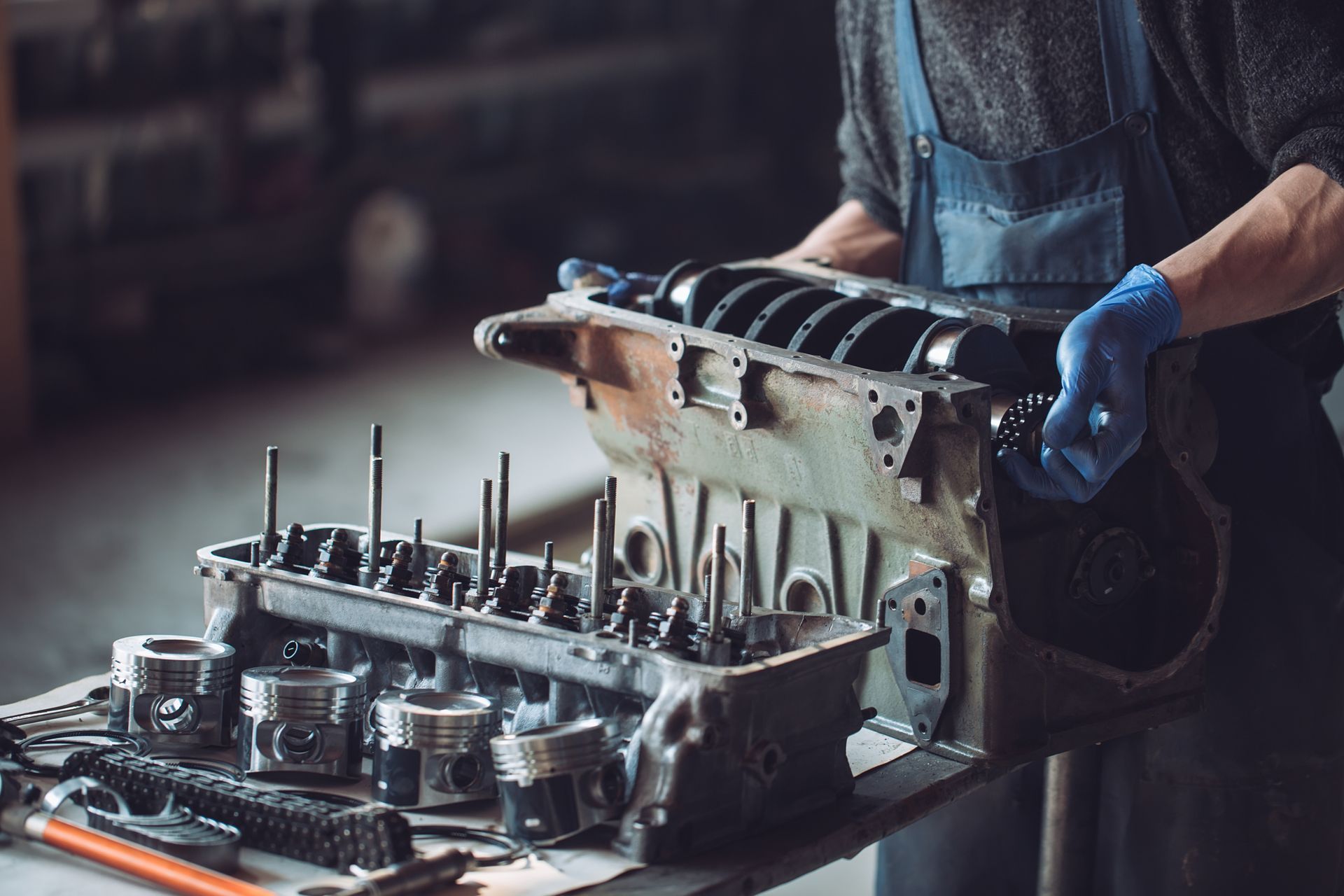
Before choosing parts, the engine is examined for the cause of its failure and evidence of secondary damage. Low oil pressure, overheating, severe wear, and internal breakage frequently damage more than one area. Once disassembled, the block, cylinder head, crankshaft, pistons, and connecting rods need cleaning and dimensional checks. Visual appearance alone doesn't reveal every out-of-tolerance surface or crack.
We use the manufacturer's specifications and accurate measuring equipment to decide what can be reconditioned. An engine that suffered oil starvation often has bearing damage beyond the first visibly worn journal. An engine with a blown head gasket also needs checks for cylinder-head warpage and cracks. Good maintenance records help explain the failure history, but the final work list depends on what disassembly reveals.
Pistons, Rings, and Cylinders Need Correct Fit
Piston rings seal combustion pressure, control oil on the cylinder walls, and transfer heat. Over time, worn rings and cylinder surfaces allow compression loss, oil consumption, and blow-by. During a rebuild, the cylinders sometimes need honing or machining to restore the correct surface finish and dimensions. The correct approach depends on wear, cylinder material, and the engine maker's permitted repair sizes.
Pistons aren't automatically reusable when the rings are replaced. Scuffed skirts, damaged ring lands, cracks, and excessive clearances change the decision. Cylinder measurements determine piston and ring selection. Bore size, taper, and assembly clearances must be verified before the rebuilt engine returns to service. A quick ring replacement in a severely worn bore seldom delivers the results expected from a properly rebuilt engine.
Crankshafts, Bearings, and Connecting Rods
The crankshaft converts piston motion into rotation, supported by main and connecting rod bearings. Loss of lubrication or contamination can damage bearings and sometimes score the crankshaft journals. Some crankshafts can be polished or reground within approved limits, while others must be replaced. Connecting rods need inspection for straightness, cracks, and damage at their bearing ends.
Bearing selection is a measurement task, not simply ordering standard-size shells. Oil clearance, journal finish, and the condition of the block's main bearing bores all affect durability. Oil passages and lubrication components also need examination because a new bearing won't last when an oil-flow problem remains.
Installing new bearings without correcting a damaged oil pump or blocked passage invites the same failure after the engine returns to service.
Cylinder Head Reconditioning and Valve Work
Cylinder heads hold the valves, springs, guides, and related valve-train parts. Cylinder-head work varies from cleaning and pressure testing to valve-guide replacement, seat machining, and approved resurfacing. A warped or cracked head can't always be reconditioned. Modern cylinder heads also contain timing and variable-valve-control parts that require their own checks on some engines.
A burned valve or worn seat affects compression even when the pistons are healthy. Camshafts, followers, and related parts require condition checks before they're reused. Their appearance alone doesn't establish safe service limits. Correct valve clearances and sealing surfaces protect long-term operation, but we avoid assuming every part needs replacement solely because the engine is disassembled. The estimate should explain which repairs are supported by measured conditions.
Gaskets, Seals, Timing Parts, and Oil Pump Checks
Reassembly requires the correct gaskets, seals, and fasteners, including torque-to-yield bolts where the manufacturer specifies replacement. Timing chains or belts, guides, tensioners, and variable timing components need evaluation for wear and damage. Oil pumps and pickup screens need close examination because poor lubrication sometimes caused the original failure. Cleanliness during assembly is vital for new bearings and machined surfaces.
What if the engine failed after a timing belt broke? Some designs suffer valve-to-piston contact, requiring work well beyond replacing the belt. The damage path must be understood before new parts are ordered. You don't want an expensive rebuild to fail the same way again.
Reusing a visibly damaged tensioner or ignoring a restricted oil pickup can undermine an otherwise thorough rebuild. These components often account for differences between two repair estimates.
What Replaced and Reconditioned Actually Mean
A replaced component is removed and substituted with a new or specified remanufactured part. Reconditioning means bringing an existing part back within permitted specifications through cleaning, machining, or other approved processes. Some components have no practical repair allowance and must be replaced when worn. The right combination depends on the engine, available parts, and the target reliability of the finished assembly.
Ask the rebuilder to identify these details:
- Which parts will be replaced with new components
- Which surfaces require machining or honing
- Measured bearing and piston clearances
- Cylinder head testing and valve work
- Timing and oil system components included
- The testing and warranty terms after assembly
A written scope prevents confusion over terms such as short block, long block, and complete rebuild. Each describes a different amount of included hardware and labor.
Assembly, Break-In, and Final Verification
A rebuilt engine depends on precise assembly procedures, clean oil passages, correct timing, and specified fastener torque. Depending on the engine, initial startup and break-in call for specified oil, operating limits, or early inspections. We follow the relevant procedure and check for leaks, abnormal noise, correct oil pressure, and stable operating temperature.
The root cause of the first failure must be corrected before the vehicle leaves the shop. A clogged radiator, faulty injector, or oil supply problem can damage a fresh rebuild just as it damaged the original engine. Future maintenance intervals and fluid specifications then become central to protecting the investment. A reliable rebuild starts with evidence and ends with verified operation.
Get Engine Rebuild Evaluation in Columbia Heights, MN, With Wagamon Brothers
Wagamon Brothers in Columbia Heights, MN, helps owners understand engine wear, rebuild options, and the inspections needed to plan major internal repairs. You'll see the inspection findings and what a rebuild would involve for your particular engine.
Call
Wagamon Brothers
or schedule an engine inspection online.